
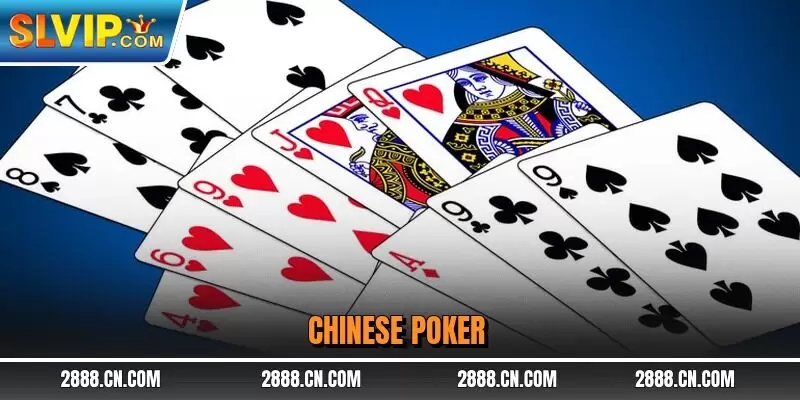
Chinese poker, or Thirteen Card Poker, is an intellectually demanding variant that requires strategic card allocation and precise combination ranking rather than direct betting action. SLVIP features dynamic multi-player tables for poker, attracting players who excel at probability calculation and long-term planning over short-term bluffing.
The simple steps that maximize your chinese poker returns
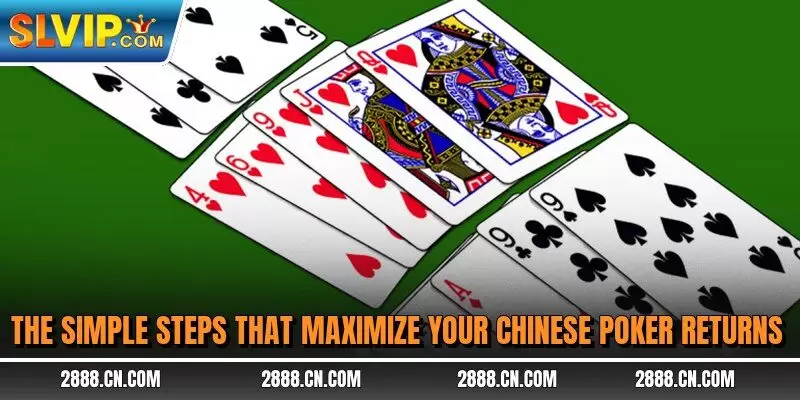
The simple steps that maximize your chinese poker returns
Chinese poker challenges players to arrange 13 dealt cards into three hands a 3-card front, 5-card middle, and 5-card back turning the game into a strategic puzzle where optimal hand placement determines the outcome.
Unlike other poker variants, scoring uses points to compare each hand against opponents, with all decisions made at the initial card allocation. SLVIP provides transparent unit tracking, ensuring players can monitor gains and losses accurately each round.
Analyzing hand setting rules and scoring in chinese poker
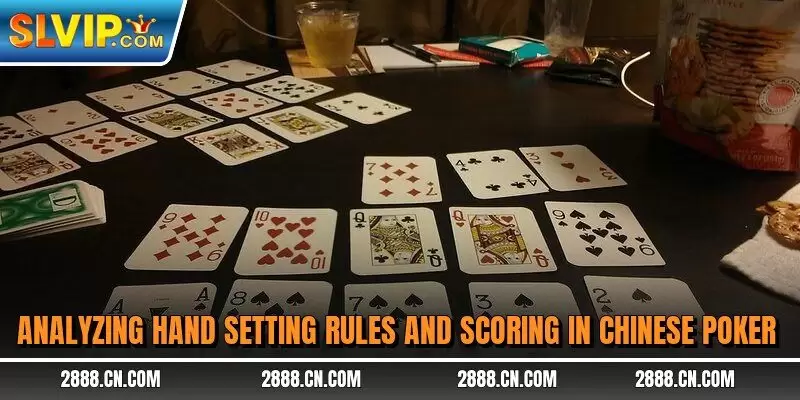
Analyzing hand setting rules and scoring in chinese poker
Successfully competing in Chinese poker requires meticulous adherence to the hand hierarchy rule, as failing this core condition results in an automatic, devastating loss known as fouling.
The rule of hand hierarchy (the foul rule)
The most critical rule in Chinese poker is the required hierarchy of the three hands, which must be strictly followed to avoid fouling.
- Back Hand (5 Cards): Must be the strongest of the three hands.
- Middle Hand (5 Cards): Must be weaker than the Back Hand but stronger than the Front Hand.
- Front Hand (3 Cards): Must be the weakest of the three hands (only valid hands are High Card, Pair, and Trip Aces in specific variants).
If the Middle Hand is stronger than the Back Hand, or the Front Hand is stronger than the Middle Hand, the entire set is considered a “Foul,” resulting in an automatic loss of all three hands plus penalty units.
Standard hand scoring (units)
Scoring in Chinese poker is typically calculated based on the number of hands won against each opponent. Each individual hand won awards 1 unit (point).
- Winning All Three Hands (‘Scoop’): If you beat an opponent on all three hands (Front, Middle, and Back), you win 3 units for the hands plus a substantial bonus (often 3 units, totaling 6 units net). This is the primary target for generating large profit.
- Winning Two Hands: If you win two hands and lose one, your net gain is 1 unit.
- Ties: If a hand is a tie (push), no points are exchanged for that specific hand.
Royalty bonuses (premium payouts)
Royalty Bonuses, or ‘Naturals,’ are additional units awarded for achieving exceptionally strong hands in specific positions, providing high-multiplier rewards.
- Back Hand Royalties: Four of a Kind (4 units), Straight Flush (5 units), Royal Flush (6 units).
- Middle Hand Royalties: Four of a Kind (8 units), Straight Flush (10 units), Royal Flush (12 units).
- Front Hand Royalties: Trip Aces (3 units).
| Hand Position | Card Count | Must Be Weaker Than… | Primary Goal |
| Back Hand | 5 Cards | None (Strongest) | Secure highest ranking possible to win units. |
| Middle Hand | 5 Cards | Back Hand | Protect against fouling; earn high-value royalties. |
| Front Hand | 3 Cards | Middle Hand | Win with a Pair or High Card; minimum exposure. |
The tactical value of the front hand
Although the Front Hand is the weakest, winning it is crucial for a ‘Scoop.’ Since only a Pair or a High Card is possible, the tactical value lies in creating the strongest possible pair (e.g., Aces) to secure the 1 unit and set up the overall win. This hand, despite its simplicity, is often the deciding factor in the final unit tally.
Unlock huge returns with a smart chinese poker approach
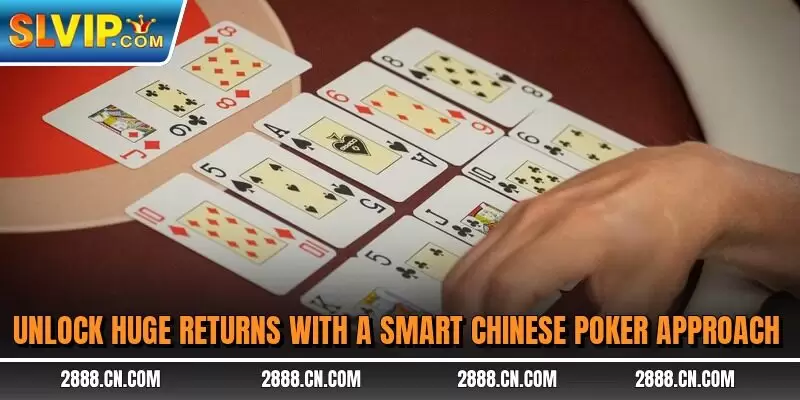
Unlock huge returns with a smart chinese poker approach
Consistent success in Chinese poker relies on disciplined card allocation, careful probability assessment, and strategic hand setting to manage fouls and mitigate volatility for long-term gains.
Prioritizing fouling avoidance
The most fundamental of all Chinese poker tricks is prioritizing fouling avoidance above all else. A foul automatically costs you a minimum of 6 units and potentially more through royalties.
The tactical advice is to set the Middle and Back hands conservatively first, even if it means sacrificing a high-value royalty, ensuring the absolute hierarchy rule is met before attempting to optimize the Front Hand.
The discipline of ‘two-pair’ distribution
When dealt two pairs, the distribution is critical. The strategic move is to always place the higher pair in the Back Hand and the lower pair in the Middle Hand.
Never split two pairs across the Back and Middle hands if a better five-card hand (like a Straight or Flush) can be built in the Back. This ensures both hands remain strong without fouling and maximizes the chance of winning two units.
Strategic management of the three-card front
The Front Hand (3 cards) is the most challenging and volatile. The tactical advice is to place the highest possible pair here (Aces are always best). If no pair is possible, hold the three highest available unconnected cards. Always assess the risk of weakening the Middle Hand too severely by taking a needed pair for the Front, which could lead to fouling.
Calculating the royalty-for-scoop trade-off
Advanced play requires calculating whether a high-value royalty (e.g., a Straight Flush in the Middle Hand) is worth sacrificing the ability to ‘Scoop’ the opponent. A Scoop earns 6 units. If the royalty is worth less than 6 units, the tactical advice is to break the hand to ensure a Scoop opportunity, maximizing the certain profit over the volatile, high-payout bonus.
Observing opponent setting patterns
In multi-round Chinese poker, observe how your opponents set their hands. Aggressive players often risk fouling by putting weak hands in the back to try and force a massive royalty in the middle.
The tactical move is to play more conservatively against these opponents, aiming for a guaranteed 1-unit win by simply focusing on a perfect, clean set that exploits their predictable risk-taking.
Conclusion
Chinese poker is an intellectually challenging variant that rewards precise card allocation, deep knowledge of hand hierarchy, and absolute discipline against fouling. SLVIP provides the platform and competitive structure necessary for serious engagement.
 Lucky 8 – Transform Your Luck With These Pro Tips
  European Bingo: Unlock Joyful Wins with Strategies!
  Pai Gow – Sneaky Tricks To Beat Every Hand At SLVIP
  Over/Under – Simple Methods To Dominate Every Match
  Unlock Success with Online Sabong Tips for SLVIP Matches
  Cover The Spread – Simple Maneuvers To Dominate Now