
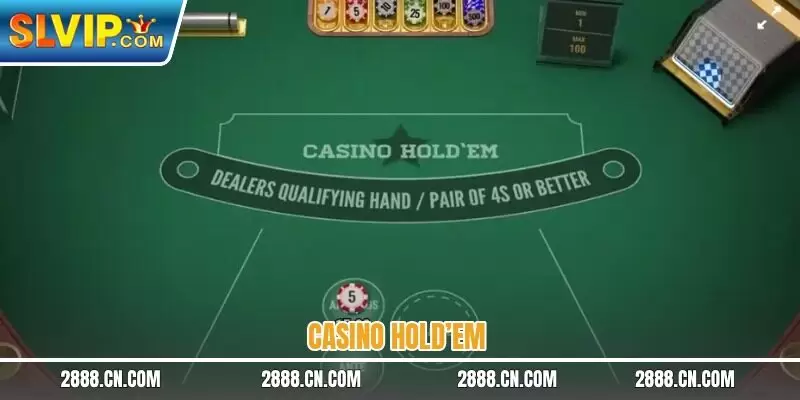
Casino Hold’em
Casino Hold’em offers all the excitement of Texas Hold’em but pits you directly against the house. This popular poker variant, available now at SLVIP, challenges you to make a better five-card hand than the dealer. It’s a game of strategy, nerve, and reading the board to make the crucial “Call” or “Fold” decision.
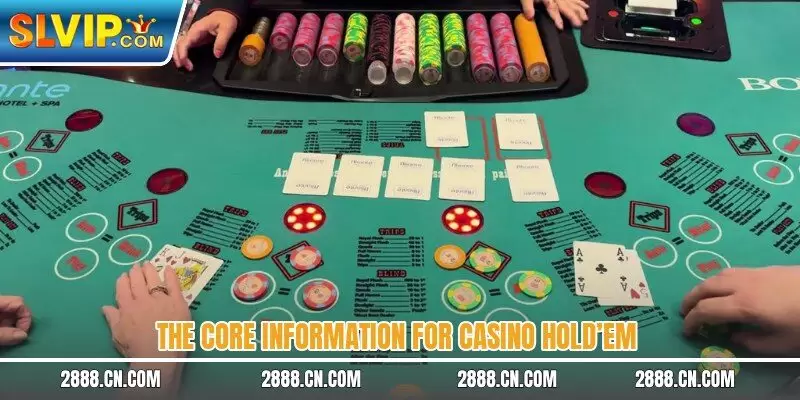
The core information for casino hold’em
The core information for casino hold’em
This game was invented in the early 2000s as a way to teach Texas Hold’em to new players, but it quickly became a casino staple in its own right.
Unlike traditional poker where you bluff other players, casino hold’em is a direct competition against the dealer. Both you and the dealer use two private cards and five community cards to construct the best possible five-card hand.
The primary objective is straightforward: Your final five-card hand must beat the dealer’s hand. The game uses a standard 52-card deck, and standard poker hand rankings apply. The appeal of casino at SLVIP comes from its blend of luck and player choice, offering a more engaging experience than games based purely on chance.
The complete rules for playing casino hold’em
The complete rules for playing casino hold’em
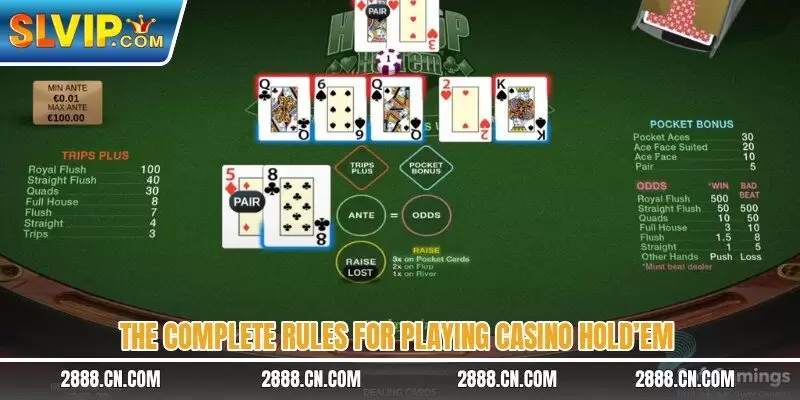
At its core, a hand of casino hold’em is very structured. You must learn the flow of the game, from the first bet to the final showdown, to make informed decisions. The process is logical and easy to follow once you have played a few hands at SLVIP.
The initial wager: Ante and AA bonus
The game of casino hold’em begins with you placing a mandatory ‘Ante’ bet. This bet secures your spot in the hand. At this stage, you also have the option to place a ‘AA Bonus’ (or ‘Aces or Better’) side bet.
This is an independent wager that pays out based only on the strength of your initial two cards plus the three-card flop, regardless of whether you beat the dealer. You win this side bet if your resulting 5-card hand is a pair of Aces or better.
The deal and the flop
After your bets are placed, the dealer will give you two cards face up (your ‘hole cards’) and two cards face down for themselves. Three ‘community cards’ are then dealt face up in the middle of the table.
This three-card deal is known as ‘The Flop’. At this moment, you have five cards available to assess: your two hole cards and the three community cards. The dealer’s cards remain a mystery, and this information imbalance is the heart of the game.
The big decision: Call or fold
This is the most critical strategic moment in casino. You must evaluate your five-card hand, which is formed from your two cards and the three flop cards. You also need to consider the potential of the two cards yet to come. You need to decide:
- Call: If you believe your hand is strong or has good potential to improve, you ‘Call’. This requires placing an additional bet that is exactly double (2x) your Ante wager.
- Fold: If your hand is very weak (for example, no pair, no draw, and low cards) and you see no path to victory, you ‘Fold’. You forfeit your Ante bet (and your AA Bonus bet if one was placed) and the round ends for you.
Your decision here dictates the rest of the hand. In casino hold’em, you cannot check or raise; you only have these two powerful options.
The final streets: Turn and river
If you choose to ‘Call’, the dealer will proceed. Two more community cards, the ‘Turn’ (the fourth card) and the ‘River’ (the fifth card), are dealt face up. These are added to the flop, bringing the total number of community cards to five. Now, all seven cards are on the table (your two hole cards, and the five community cards).
The art of reading souls across casino hold’em tables
The art of reading souls across casino hold’em tables
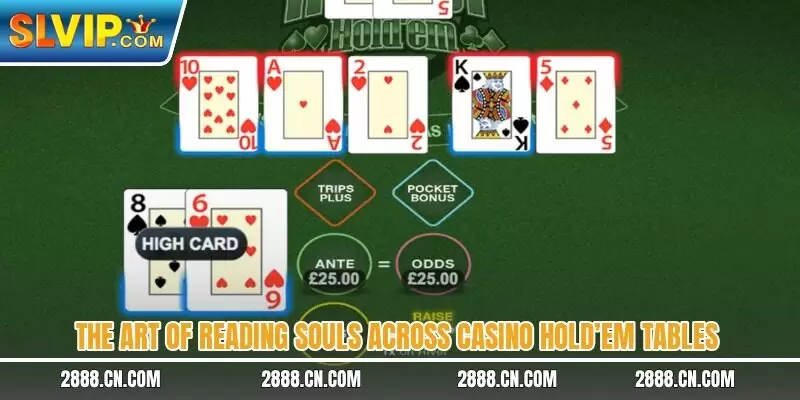
While casino hold’em involves luck from the deal, your Call/Fold decision is pure strategy. Applying a consistent approach is what separates novice players from smart ones.
The 82% rule: When to call
The mathematically derived optimal strategy for casino is surprisingly simple, though hard to perfect. The general consensus is that you should ‘Call’ approximately 82% of the hands you are dealt. This means you should only be folding the absolute worst, non-connecting, low-card hands (like a 7-2 offsuit on a K-J-5 flop).
You should almost always call if you have:
- Any pair (even low pairs like 3s or 4s).
- Any Ace-high or King-high hand.
- Any two overcards (e.g., you have Queen-Jack when the flop is 10-7-2).
- Any flush draw (you have two cards of the same suit, and two more are on the flop).
- Any open-ended or gutshot straight draw (e.g., you have 8-7, flop is 9-6-2).
Folding strong draws or top-card hands is a common mistake. In casino hold’em, you must be aggressive and play most of your hands. The dealer qualification rule often works in your favor, turning your “Call” on a weak hand into a win if the dealer fails to get a pair of 4s.
Understanding the AA bonus bet
The AA Bonus bet is a separate proposition. It can be tempting due to its high payouts for premium hands like a Flush or better, all determined from the flop. However, you must understand that this is a side bet with a significantly higher house edge than the main casino game.
If your primary goal is to play for a long time and use the best strategy, experts often suggest skipping this bet. It does not influence the main game and is a drain on your bankroll over time. If you are playing for the thrill of a big, quick payout and understand the risk, it can be a fun addition. But do not consider it part of the core strategy; it’s a high-volatility gamble.
Do not forget the dealer’s hand
A common error in casino hold’em is focusing only on your own hand strength. You must also consider the community cards and how they might help a random two-card hand.
- If the flop is very coordinated (e.g., 8-9-10 of hearts), your single pair of Kings is suddenly much more vulnerable than if the flop was 2-7-K. That coordinated board can easily make a straight or flush.
- Conversely, if you have a weak hand but the board is paired (e.g., 7-7-2), you must remember that the dealer also has to play this board. Your high card Ace might be good.
Always assess how the community cards connect with your hand and how they might have connected with the dealer’s two hidden cards. This consideration will help you make better fold decisions with hands that look good but are likely beaten.
Conclusion
Casino hold’em remains one of the most engaging poker games available. By understanding the flow of play, the dealer qualification rule, and the 82% call strategy, you are set for success. It is a game that rewards smart decisions and patience. Apply this knowledge and enjoy the challenge at SLVIP.
 Lucky 8 – Transform Your Luck With These Pro Tips
  European Bingo: Unlock Joyful Wins with Strategies!
  Pai Gow – Sneaky Tricks To Beat Every Hand At SLVIP
  Over/Under – Simple Methods To Dominate Every Match
  Unlock Success with Online Sabong Tips for SLVIP Matches
  Cover The Spread – Simple Maneuvers To Dominate Now