
Poker chip values represent the fundamental currency of the game, dictating betting structure, stack size, and tournament survival strategy. SLVIP offers premier digital and live poker rooms where understanding the standardized poker chip is non-negotiable for effective play.
Poker chip values reveal secrets to fast payout betting

Poker chip values reveal secrets to fast payout betting
Poker chip values are standardized using consistent color codes to ensure quick identification and smooth betting, allowing players to estimate pot sizes and stack depths efficiently. While the exact monetary value varies by casino, the core color hierarchy white/red, blue/green, black, purple is widely maintained.
A key distinction exists between cash games and tournaments: in cash games, chips have explicit monetary value, whereas in tournaments they represent units with no inherent cash value. This requires players to adjust their strategy, treating chips as survival tools rather than actual currency.
Poker chip values explained to boost table control and odds

Poker chip values explained to boost table control and odds
Successfully managing your chip stack requires precise knowledge of the standard color assignment and the specific financial role each denomination plays within the betting structure.
Standard chip color hierarchy
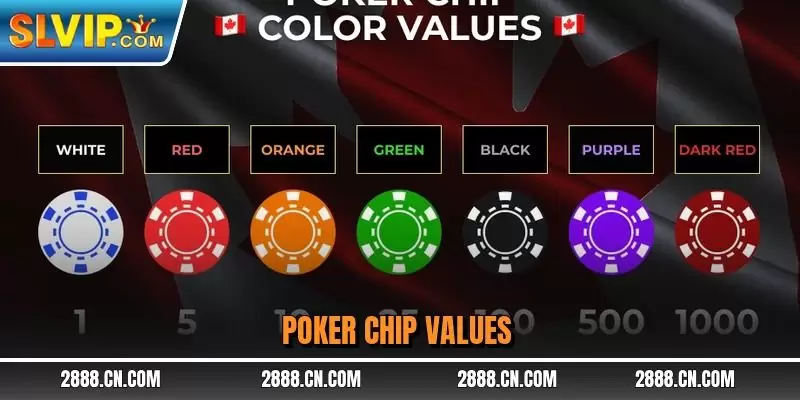
While local variations exist, particularly in low-stakes games, the international standard color system for poker chip values follows a logical progression, making it easy to identify chips from different denominations quickly.
- White/Gray (Value: $1): The lowest denomination, often used for blinds in small cash games or for making small change.
- Red (Value: $5): The first common, high-frequency betting chip in cash games.
- Green (Value: $25): The standard quarter chip. Used frequently in mid-stakes games and for large pots.
- Black (Value: $100): The primary high-denomination chip, often used for major bets and raises.
- Purple (Value: $500): Used for deep-stacked cash games or the later stages of large tournaments.
- Yellow/Orange (Value: $1,000+): High-value chips, often used in high-roller cash games or the final tables of major tournaments.
Tournament vs. cash game
The function of poker chip values differs dramatically between the two main poker formats, demanding a psychological shift in chip valuation.
- Cash Game Chips: These chips have literal, tangible cash value. Losing a $100 Black chip means losing exactly $100. Stack management focuses on minimizing cash loss.
- Tournament Chips: These chips represent abstract survival units. Losing a 10,000 unit chip means losing survival equity, not necessarily $10,000. Stack management focuses on maximizing chip accumulation relative to the blinds.
Tactical chip visibility (stack sizing)
The manner in which you organize and display your poker chip is a crucial part of table etiquette and strategic communication.
Your largest denomination chips must always be clearly visible at the front of your stack to allow opponents to easily estimate your total chip count. Hiding high-value chips is considered unethical and can lead to penalties in regulated play.
| Chip Color | Standard Value (Cash) | Primary Function (Tournament) | Strategic Note |
| White/Red | $1 / $5 | Small blinds and ante. | Used for making change and small calls. |
| Green | $25 | Mid-level blinds and simple raises. | Core chip for medium-sized pots. |
| Black | $100 | High raises and re-raises. | High-value currency in later rounds. |
| Purple | $500 | Survival unit (deep stack). | Should be kept clearly visible at all times. |
Poker chip values tips that boost winnings in every session

Poker chip values tips that boost winnings in every session
Consistently winning with poker chip values requires more than knowing their worth, it demands disciplined stack handling, tactical betting, and careful bankroll management to control risk and boost long-term profits.
Strategic chip presentation (stack size)
The tactical goal is to make your stack appear intimidating, regardless of its true depth. Arrange your poker chip neatly in columns of 20 chips, with the largest denominations clearly visible.
A tidy, well-organized stack projects confidence and professionalism, subtly influencing opponents to believe you are a serious, highly disciplined player, potentially causing them to fold marginal hands.
Utilizing chip counting for opponent reads
Never rely on an opponent to declare their stack size. The tactical advice is to practice quickly estimating the size of an opponent’s stack by observing their chip columns and high-denomination chips.
This ability to instantly read the total poker chip values allows you to tailor your bet sizing (e.g., making a half-pot continuation bet) to exert maximum pressure without risking an unnecessary all-in confrontation.
Controlling the pot size with high-denomination chips
When placing a bet, always use the smallest number of high-denomination chips necessary for the wager. For example, to bet $100, place one $100 black chip, not twenty $5 red chips.
This conserves your chips for easier counting and prevents accidentally “string betting” (placing chips incrementally, which is disallowed). Conversely, if you want to subtly intimidate, you might use a large chip to represent a smaller bet, hoping the opponent misreads the intention.
The discipline of coloring up (removing small chips)
In cash games, as the blinds remain constant and your stack grows, constantly request that the dealer “color up” your small-denomination chips into larger poker chip values.
This minimizes table clutter, streamlines the betting process, and visually reduces the perceived size of your stack, which can be a valuable psychological advantage against inexperienced opponents who often overestimate the importance of sheer volume.
Strategic management of tournament chip survival
In tournaments, the strategic value of poker chip values is always tied to the increasing blinds and your ‘M-Ratio’ (your stack divided by the cost of one full round of blinds/antes).
The tactical move is to risk chips primarily when your M-Ratio drops below 10, indicating imminent elimination. Conversely, if your M-Ratio is high (above 20), you can afford to play conservatively, preserving your substantial poker chip stack.
Planning chip investment for multi-level betting
When planning bets across multiple hands, consider distributing your poker chip to maintain flexibility for both small and large wagers. Avoid committing all high-denomination chips early; instead, preserve some for critical moments later in the session.
This ensures you can respond effectively to aggressive plays, survive prolonged pots, and exploit opportunities when opponents overextend, maximizing long-term session profits.
Conclusion
Mastering poker chip values transforms your play from basic betting to strategic dominance. With SLVIP’s clear chip standards, disciplined stack management, and quick opponent reads, you can consistently leverage both psychological and financial advantages at the table.
 Pioneering Fashion Bones Struts Into Halloween Glory At SLVIP
  Dragon Boat Brings Epic Slot Machine Excitement To SLVIP
  Wizard Of Wild Conjures Fierce Fantasy Battles At SLVIP
  Coffee Wild – Secrets To Boost Your Daily Luck At SLVIP
  Dazzling Plinko At SLVIP – A Thrill-Seeker’s Dream Betting Game
  Match Result (1×2) – Top Methods To Outsmart The Odds