
Welcome to SLVIP Online Casino
Omaha Poker has grown rapidly in popularity at SLVIP, delivering a high-energy style of play where every decision feels more impactful. With four hole cards and fast, shifting betting action, it challenges players to think deeper and adapt quickly. More than just a variant, it introduces a new and exciting dimension to the poker experience.
The fast-paced excitement of Omaha Poker at SLVIP

The fast-paced excitement of Omaha Poker at SLVIP
Omaha Poker stands out by giving players four hole cards instead of two, creating more possible combinations and a faster pace of decisions. Because players must use exactly two hole cards and three community cards to form their hand, the format rewards discipline, calculation, and strong positional awareness.
At SLVIP, Poker rooms are built for both beginners and experienced players, offering smooth gameplay, responsive controls, and clear hand histories. With fair mechanics and an immersive design, the platform delivers a strategic environment where players can confidently test their skills.
Rules of Omaha Poker explained with clarity and flow
Rules of omaha poker explained with clarity and flow
To succeed in Omaha Poker, players must grasp how the game unfolds step by step. While it shares some similarities with other poker formats, its unique hand-building rules and four-card starting hands require a fresh approach and sharper focus.
Basic hand structure and setup
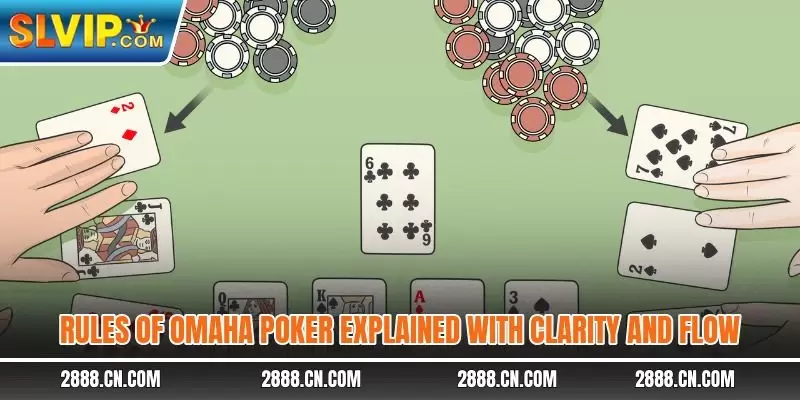
Each player in Omaha Poker is dealt four private hole cards at the start of the hand. The player holds exclusive sight of these cards. Five community cards are then revealed in stages: the flop shows three cards, followed by the turn and the river revealing one card each.
Unlike Hold’em, players must construct their final hand using exactly two of their hole cards and three of the five community cards.
| Stage | Action Taken |
| Pre-flop | Four hole cards dealt to each |
| Flop | Three community cards revealed |
| Turn | One additional community card |
| River | Final community card dealt |
| Showdown | Players reveal best hand using two hole cards and three board cards |
This structure leads to more possible combinations and demands stronger reading skills. Players might hold four cards that seem strong individually but cannot form a solid five-card hand with the board unless precisely two are used. This rule catches many newcomers by surprise.
Betting rounds and decision timing
Understanding how each betting stage works helps players plan their moves and control risk more effectively. In Omaha Poker, timing and discipline matter just as much as card strength.
- The game has four betting rounds: pre-flop, post-flop, turn, and river
- On each round, players may fold, check, call, raise, or re-raise
- Betting styles depend on the table format
- Pot-Limit Omaha (PLO) is the most common version, where bets are capped by the current pot size
- This structure creates an intense but controlled betting environment
- Bluffing is still possible but requires careful planning and believable action
- Because more combinations exist, players call more often, so bluffs must be well-timed and selective.
Understanding hand values and misreading risks
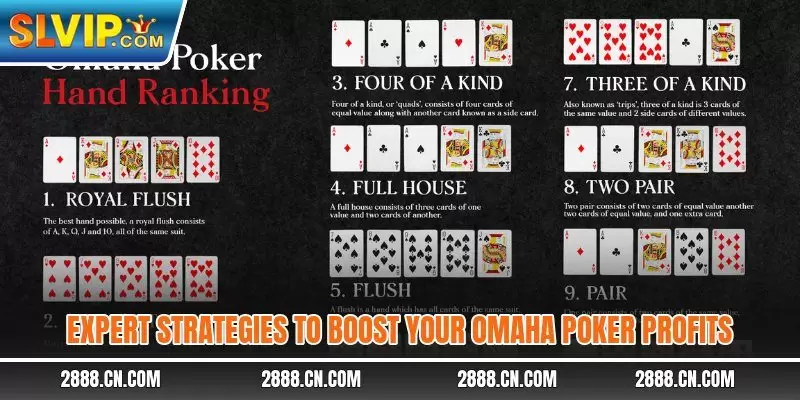
Winning hands in Omaha Poker are generally much stronger than in Hold’em, with straights, flushes, and full houses appearing more often due to the extra cards in play. This raises the minimum strength needed to win and leads to more intense showdowns.
Many beginners also misread hands, especially with suited cards or small pairs. A flush requires exactly two cards from your hand plus matching cards on the board, and SLVIP provides tools and guides to help players check their combinations accurately.
Pot construction and aggressive dynamics
Because game produces stronger hands, the pot tends to grow faster. In pot-limit settings, a few well-placed bets can create a massive pot by the river. This attracts action from players who chase draws, especially straight and flush possibilities.
Managing the size of the pot and your stack becomes essential to long-term success. Players who regularly go all-in without understanding draw percentages quickly burn through chips, while others use calculated aggression to build sustainable momentum.
Expert strategies to boost your Omaha Poker profits
Expert strategies to boost your Omaha Poker profits
To elevate your Omaha Poker game at SLVIP, you need more than just knowledge of the rules. Smart strategies, mental discipline, and real-time adaptability can turn average players into consistent winners.
Here are proven methods used by experienced players to succeed in this high-action format.
Focus on hand selection from the start
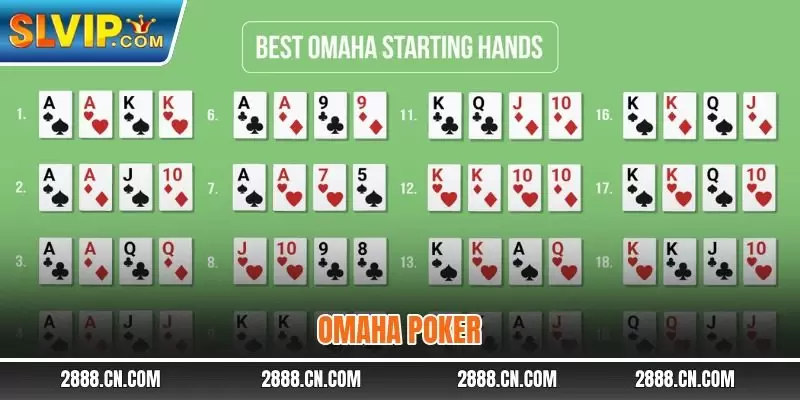
Strong starting hands in Omaha Poker greatly increase your chances of building powerful combinations later. Double-suited connectors and high pairs are usually more profitable, such as K-Q suited with J-T suited, which creates strong straight and flush potential.
In SLVIP sample testing, hands of this type performed significantly better post-flop than unconnected, mixed-suit cards. Hands with isolated high cards or weak, unrelated combinations are best avoided. Even with four cards, disciplined folding is essential for long-term profit.
Read the board texture before committing
Every flop reveals key information about potential draws and made hands. When the board shows connected cards or matching suits, opponents are more likely to chase straights or flushes, and with more players seeing the flop in Omaha, someone often connects strongly.
Betting hard on dangerous boards without real support can lead to costly mistakes. SLVIP data shows that careful flop analysis plays a major role in accurate turn decisions among winning players. Treat the board as a puzzle and base your bets on what it suggests, not on wishful thinking.
Learn when to slow down your betting pace
In game, it’s tempting to continue betting once you catch a piece of the flop. However, many players overcommit early and leave themselves vulnerable to stronger combinations. For example, if you hit a bottom straight but the board pairs on the turn, slow down. You may be facing a full house without realizing it.
Smart players at SLVIP often use check-call lines to control pot size and reduce risk. Over long sessions, this tactic preserves bankroll and creates more opportunities for capitalizing on stronger hands later.
Bluff selectively and with strong blockers
Bluffing in the game is riskier because there are many strong hand possibilities, but it can still work when supported by blockers. Blockers are cards in your hand that reduce the likelihood your opponent holds a certain hand, and in situations like missed flushes, a well-timed bet can succeed.
Bluffing without blockers is rarely advisable. SLVIP session data shows that players who bluffed with at least one relevant blocker were significantly more successful than those who bluffed randomly, proving that timing and hand awareness make all the difference.
Conclusion
Omaha Poker at SLVIP offers a fast, strategic experience where stronger hand possibilities and deeper decisions create constant excitement. Each session challenges players to read the board, manage risk, and stay disciplined. Whether improving your skills or chasing bigger games, this format provides a rewarding arena for growth.
 Pioneering Fashion Bones Struts Into Halloween Glory At SLVIP
  Dragon Boat Brings Epic Slot Machine Excitement To SLVIP
  Wizard Of Wild Conjures Fierce Fantasy Battles At SLVIP
  Coffee Wild – Secrets To Boost Your Daily Luck At SLVIP
  Dazzling Plinko At SLVIP – A Thrill-Seeker’s Dream Betting Game
  Match Result (1×2) – Top Methods To Outsmart The Odds