
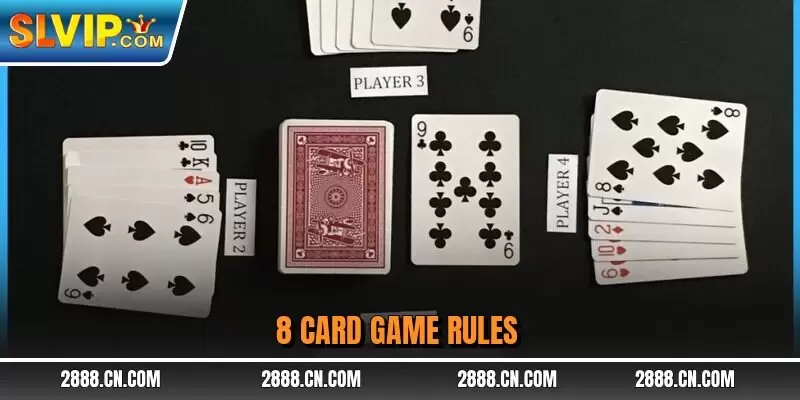
8 card game rules govern the fast-paced, shedding-style card game known as Crazy Eights, where simple mechanics meet deep strategic play and high-stakes penalty scoring. On SLVIP, players can enjoy competitive digital tables that reward quick thinking, tactical timing, and sharp decision-making for those aiming to turn skill into real wins.
8 card game rules hacks for smarter betting decisions
8 card game rules hacks for smarter betting decisions
The core of 8 card game rules lies in the wild 8 cards, which can swiftly reverse momentum and create unpredictable gameplay. A well-timed 8 can change the active color, forcing opponents to draw extra cards and applying intense psychological pressure that requires constant calculation of their hands.
Equally important is the penalty scoring system: When a player empties their hand, opponents accumulate points based on remaining cards, with face cards and 8s carrying the highest values. This forces players to shed high-value cards early, balancing penalty mitigation with strategic play.
Step-by-step guide to 8 card game rules sign-up perks
Step-by-step guide to 8 card game rules sign-up perks
Successfully wagering on 8 card game rules requires familiarity with the three main card types (Number, Action, and Wild), the penalties associated with each, and the structure of the final scoring tally.
The objective and basic matching play
The fundamental objective of 8 card game rules is to be the first player to successfully discard all the cards in their hand, thereby achieving a score of zero for that round and forcing all opponents to tally their residual penalty points.
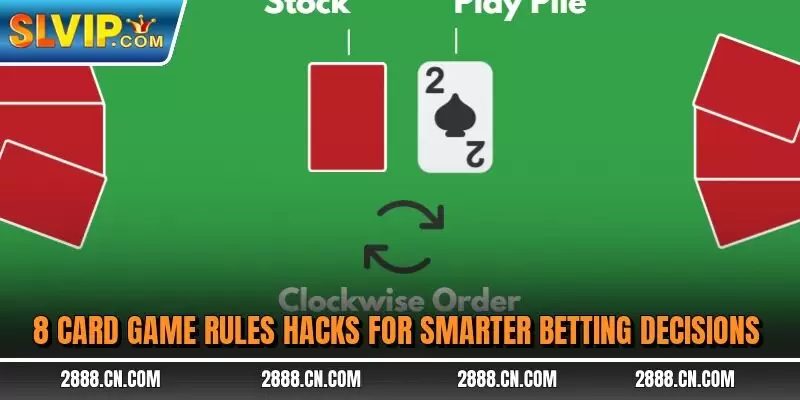
- Matching: Players must match the card on top of the discard pile either by color or by number/symbol.
- Drawing: If a player cannot play a card, they must draw the top card from the face-down Stock Pile until a playable card is found or the Stock Pile is exhausted.
Card types and their unique functions
The deck is composed of Number Cards, Action Cards (Skip, Reverse, Draw Two, Draw Four), and the Wild Card (the ‘8’).
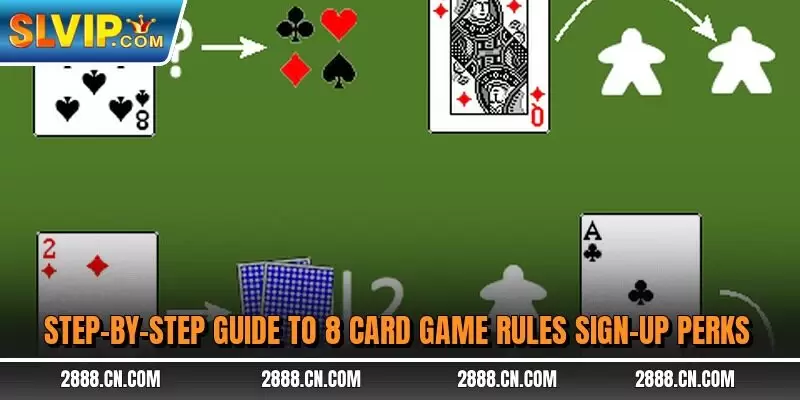
- The Wild 8: Can be played on any card, regardless of color or rank. When played, the player declares the new active color. This is the most powerful card under 8 card game rules.
- Action Cards (Draw Two/Skip/Reverse): Impose penalties or disrupt the turn order, forcing opponents to draw cards or lose a turn.
The severe penalty scoring system
No points are awarded to the victor of the round; conversely, all competitors who didn’t win are assigned negative points corresponding to the value of their remaining unplayed cards. The game continues across multiple rounds until one player reaches a predetermined score (e.g., 100 points).
- The King, Queen, Jack, and the ten-valued cards are each worth ten points.
- Action Cards (Draw Two/Skip/Reverse): Count 20 points each.
- The Wild 8: Worth 50 points if left in hand (the highest penalty).
| Card Rank | Penalty Point Value | Strategic Risk Profile | Tactical Purpose |
| Number Cards (7-9)
|
7-9 points
|
Low
|
Maintain board flow and shed. |
| Action Cards (Skip/Reverse) | 20 points | High | Disrupt opponent’s winning position. |
| Wild 8 | 50 points | Extreme | Game-changing control; reserved for defense. |
The crucial ‘going out’ action
A player wins the round when they shed their final card. The psychological element involves hiding this intention until the last moment, often utilizing the Wild 8 to change the color to one the next opponent cannot match, securing the victory. The winner forces the immediate tallying of all opponent scores.
Boost profits fast with 8 card game rules exclusive techniques

Boost profits fast with 8 card game rules exclusive techniques
Consistent, long-term success in 8 card game rules wagering hinges on disciplined discarding, precise penalty risk calculation, and tactical use of the wild 8; this strategic approach mitigates volatility and ensures profitability through intelligent hand management.
The discipline of low-penalty shedding
The primary strategic aim is to promptly reduce your deadwood tally. The strategic advice is to ruthlessly discard high-value, unconnected cards (all 20-point Action Cards and 10-point Face Cards) early in the round.
The financial necessity of reducing a potential 50-point penalty from a held ‘8’ far outweighs the small risk of helping an opponent shed a single low-value card. Prioritize eliminating penalty exposure above all else.
Tactical deployment of the wild 8
The ‘8’ is your most powerful asset and should be reserved exclusively for defense or winning. Never waste the ‘8’ when you have a valid colored card to play.
The two critical scenarios for deployment are: 1) To avoid drawing from the deck when you have no other playable card, or 2) To strategically change the suit to one you know the next opponent is weakest in, forcing them to draw penalties and preventing them from going out.
Controlling the flow by color manipulation
A subtle but powerful tactical maneuver is controlling the active color. If you hold a dominant color, try to play matching numbers/ranks of other colors first. This conserves your dominant color for later.
When you eventually play the Wild 8, declare the color in which you have the most high-value cards, ensuring you have the highest probability of shedding those punitive cards on subsequent turns.
Strategic management of the high-risk cards
The 50-point Wild 8 and the 20-point Action Cards must be managed ruthlessly. The tactical advice is to treat the ‘8’ as a final defensive shield:
If you are down to two cards and one is an ‘8’, hold it until the absolute last moment, as it is your only guaranteed way to play out regardless of the color required by the discard pile. Avoid holding multiple 20-point cards simultaneously.
Psychological deception and hand concealment
Avoid signaling your intention to go out too early. The tactical trick is to play conservatively and draw cards even when you have a playable, low-value card.
This deception prevents opponents from immediately targeting you with ‘Draw Two’ or ‘Skip’ cards, protecting your small remaining hand size. Only reveal your hand strength in the last two or three moves.
Conclusion
8 card game rules create a fast-paced, mentally demanding shedding game where timing and tactics are key. SLVIP offers reliable multi-player tables that reward sharp decision-making. Focusing on low-penalty plays, smart deployment of the Wild 8, and psychological control helps players maintain an edge and secure steady wins.
 Pioneering Fashion Bones Struts Into Halloween Glory At SLVIP
  Dragon Boat Brings Epic Slot Machine Excitement To SLVIP
  Wizard Of Wild Conjures Fierce Fantasy Battles At SLVIP
  Coffee Wild – Secrets To Boost Your Daily Luck At SLVIP
  Dazzling Plinko At SLVIP – A Thrill-Seeker’s Dream Betting Game
  Match Result (1×2) – Top Methods To Outsmart The Odds